




 2026-08-01
 Author : Ayanna Research


As enterprise adoption of generative AI accelerates, the growing complexity of managing an increasingly diverse range of AI models is emerging as a new business challenge.
Against this backdrop, OpenSand—an enterprise AI infrastructure platform with Ayanna Research Limited serving as an operating partner—has officially launched its services.
OpenSand integrates leading AI models from around the world into a single API interface, including OpenAI’s GPT series, Anthropic’s Claude and Claude Code, Google’s Gemini, DeepSeek, GLM, Kimi, Qwen, MiniMax, and Seedance. Enterprises and AI developers can seamlessly access and manage multiple models from a single environment.
Rather than simply aggregating AI models, OpenSand is designed as enterprise infrastructure for the stable, long-term use of AI.
AI Adoption Is Shifting from “Which AI to Use” to “How to Manage It”
Since the launch of ChatGPT, enterprises have rapidly expanded their use of generative AI.
Today, however, the central question is no longer whether businesses should adopt AI. Instead, they face a more practical challenge: determining which models to use for specific tasks and how to operate them securely and cost-effectively.
For example:
- Claude Code and the GPT series can be used for software development;
- DeepSeek can support advanced reasoning;
- Gemini can be used for information retrieval; and
- Multimodal AI can support image and video generation.
The most suitable model varies depending on the use case.
At the same time, AI agents capable of coordinating multiple models and autonomously executing tasks are becoming more widespread. As a result, system architectures built around a single model are beginning to show their limitations.
What enterprises need to manage is increasingly not the AI models themselves, but the infrastructure that supports them.
The Evolving Role of AI Infrastructure
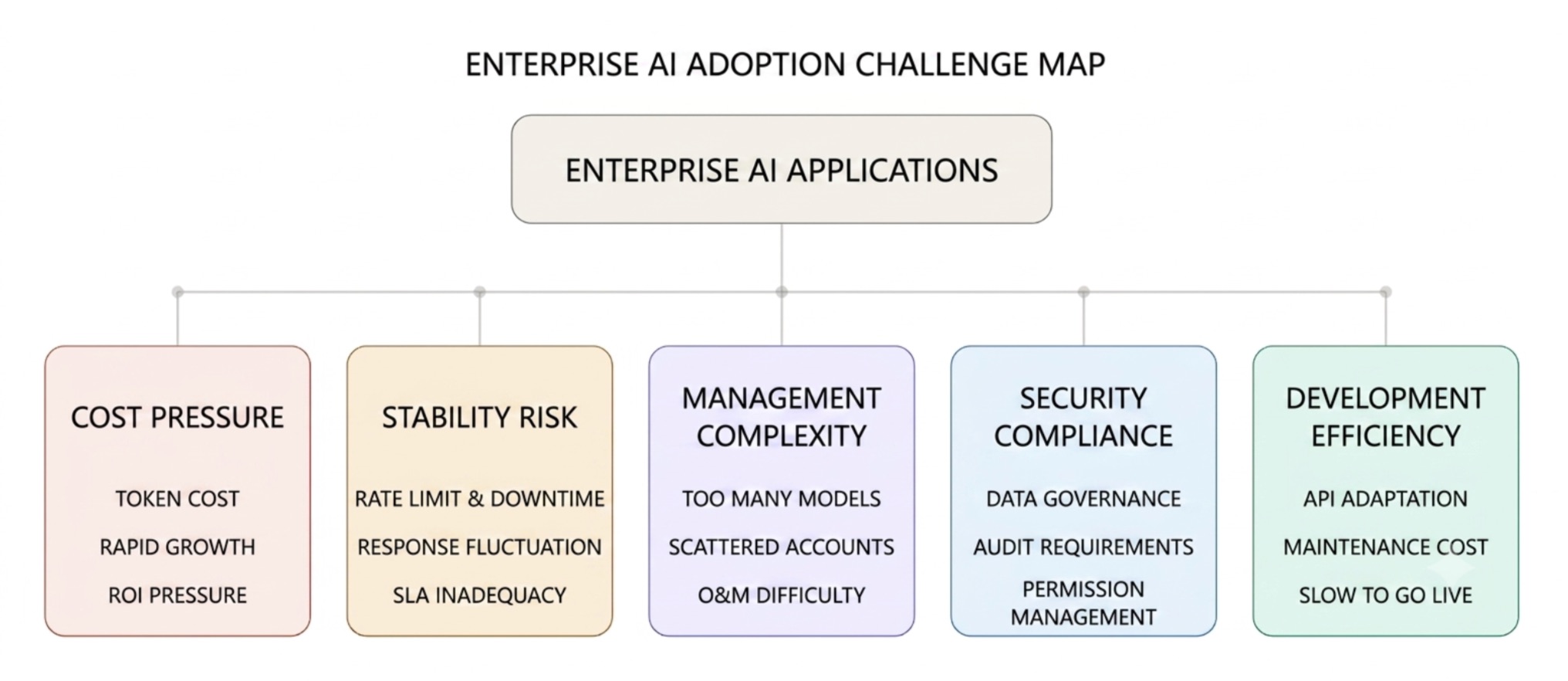
In practice, each AI vendor has its own API specifications, authentication methods, pricing structure, and usage limits.
For enterprises using multiple AI models, this creates a rapidly growing operational burden, including:
- Implementing each API separately;
- Managing multiple vendor accounts;
- Monitoring and visualizing usage costs;
- Establishing appropriate security measures;
- Managing user and departmental access permissions; and
- Consolidating billing and payments.
As enterprise AI adoption moves from proof-of-concept initiatives to company-wide deployment, businesses need more than individual AI models. They need infrastructure capable of delivering AI services as reliably as cloud computing platforms deliver computing resources.
OpenSand was designed to address this need.
Access Leading AI Models Through a Single Interface
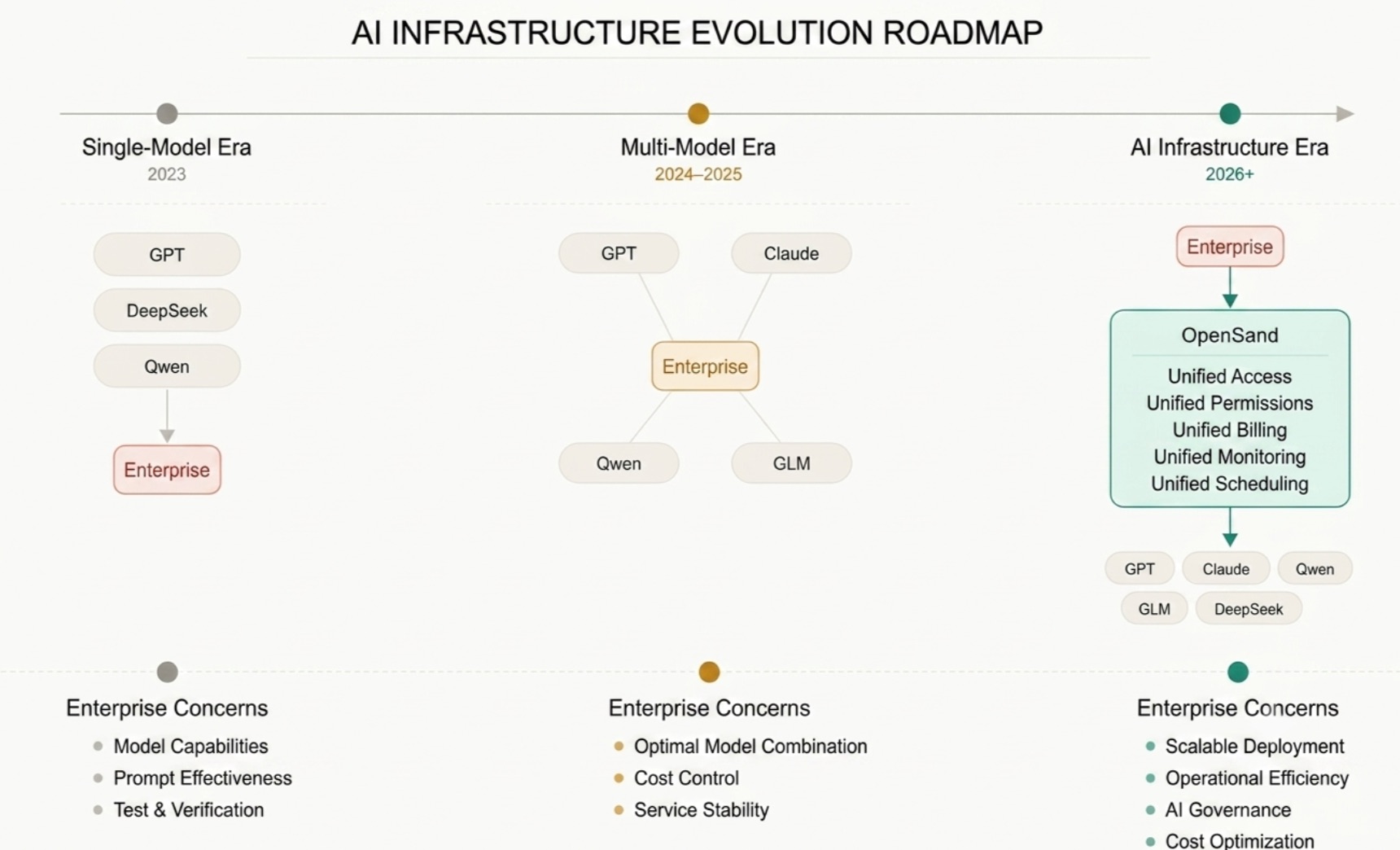
OpenSand is an integrated platform that enables enterprises to access leading AI models worldwide through a single API.
In addition to proprietary models from providers such as OpenAI, Anthropic, and Google, the platform also supports a broad range of rapidly evolving open-source models.
Whether for code generation, reasoning and analysis, multimodal content generation, or AI agent development, enterprises and developers can flexibly select the most appropriate model for each use case.
Developers no longer need to integrate and maintain separate APIs for individual AI vendors. Instead, they can switch between the required models within a unified environment.
For enterprises, this provides greater flexibility in how AI is used while significantly improving operational and development efficiency.
Four Key Benefits of OpenSand
1. Enterprise-Grade Reliability
OpenSand connects directly to official APIs and does not rely on unauthorized scraping or other unofficial methods.
By combining distributed nodes located across regions including Hong Kong, North America, and Southeast Asia with account-pooling technology, the platform is designed to maintain stable token availability even during periods of high demand.
This architecture supports the high levels of availability required by enterprise systems.
2. Optimized AI Usage Costs
As enterprise AI adoption scales, API usage fees are becoming a significant cost-management concern.
OpenSand uses the economies of scale created through large-volume token procurement to reduce costs compared with contracting separately for individual official APIs.
Its proprietary caching technology also achieves hit rates of 65% to more than 85%, reducing unnecessary API calls while improving both response times and cost efficiency.
3. Developer-Friendly Integration
OpenSand offers a high degree of compatibility with SDKs from major AI providers, including OpenAI.
Existing projects can be migrated simply by changing the Base URL and API Key, without requiring extensive modifications to the underlying code.
This allows enterprises to access a wide range of AI models while minimizing disruption to their existing systems.
Developer documentation is also available to further reduce the barriers to implementation.
4. Enterprise-Level Security
For enterprise users, data protection and regulatory compliance are just as important as model performance.
OpenSand is designed specifically for enterprise use, with a strong emphasis on information management and governance. This approach supports the secure and continuous operation of enterprise AI systems.
Moving Enterprise AI from PoC to Production
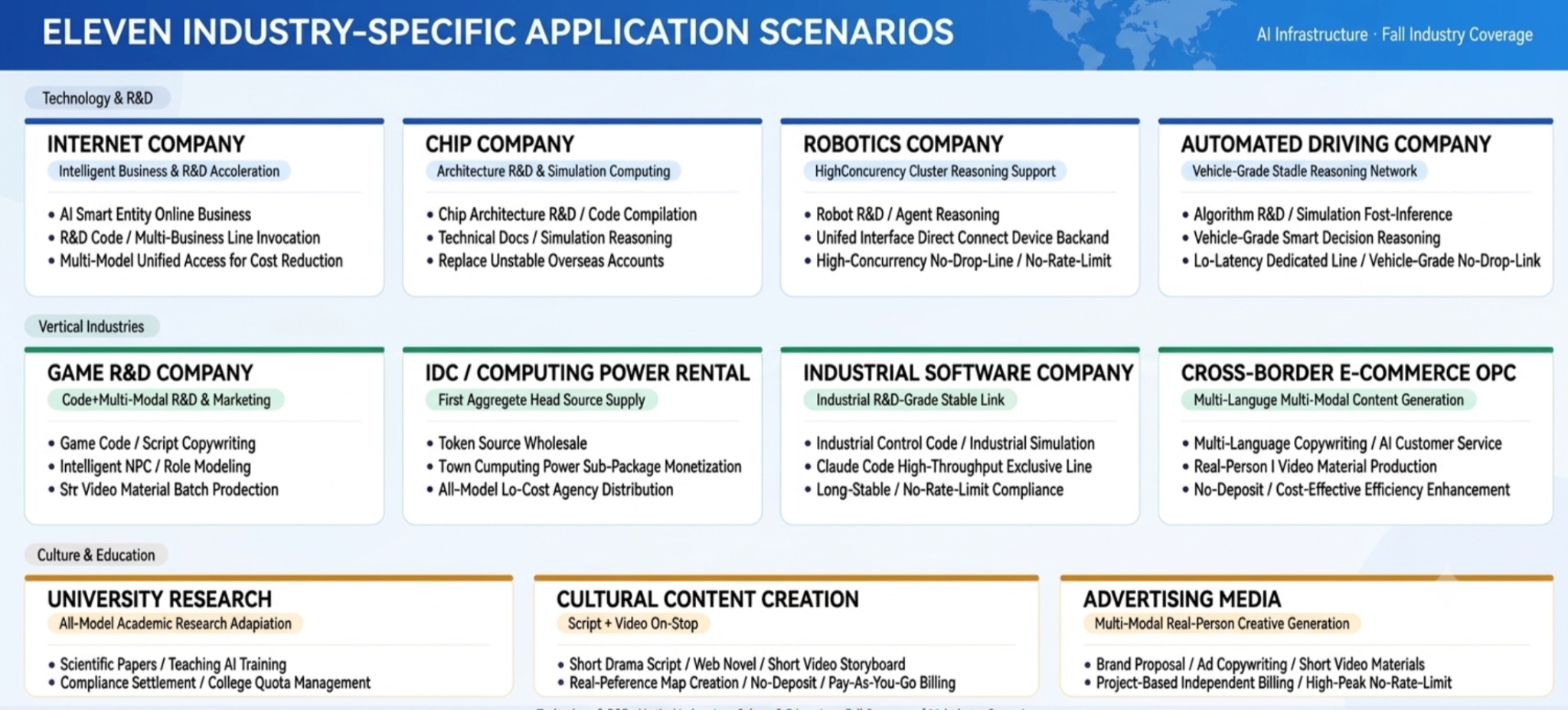
OpenSand is currently being used across 11 major industries, including internet services, semiconductors, robotics, autonomous driving, game development, industrial software, cross-border e-commerce, academia, research institutions, content production, and advertising and media.
What these organizations have in common is that they are moving beyond simply experimenting with AI and beginning to integrate it into their core business infrastructure.
As a result, their requirements are also changing. Enterprises increasingly need production-ready AI infrastructure capable of supporting high-frequency API usage, high availability, cost management, access control, and consolidated billing.
OpenSand is positioned as the infrastructure that enables enterprises to move their AI initiatives from proof of concept into production environments.
From AI Model Competition to AI Infrastructure Competition
The Head of Business at OpenSand commented:
“AI is moving from an era focused on competing through technological innovation itself to a stage in which it is used continuously in real-world business. What enterprises need is not a specific AI model, but an AI service foundation that provides stability, cost efficiency, security, and compliance. We aim to support that foundation as the infrastructure connecting enterprises with AI technologies around the world.”
Just as cloud computing became the infrastructure that provides enterprises with computing resources, intelligence itself is now emerging as a new form of infrastructure in the AI era.
Enterprise competitiveness will depend not only on which AI models companies adopt, but also on how securely and efficiently they can operate multiple models.
As infrastructure for this new era, OpenSand aims to provide long-term support for enterprise digital transformation and AI adoption.
About OpenSand
Official website: https://opensand.ai/
OpenSand is a platform specializing in enterprise AI infrastructure.
Through a unified API interface, it provides access to leading AI models from around the world, enabling enterprises and developers to use AI securely and cost-effectively.
By centralizing access to multiple AI models, operational management, and cost optimization, OpenSand supports the development of next-generation AI applications and enterprise digital transformation.